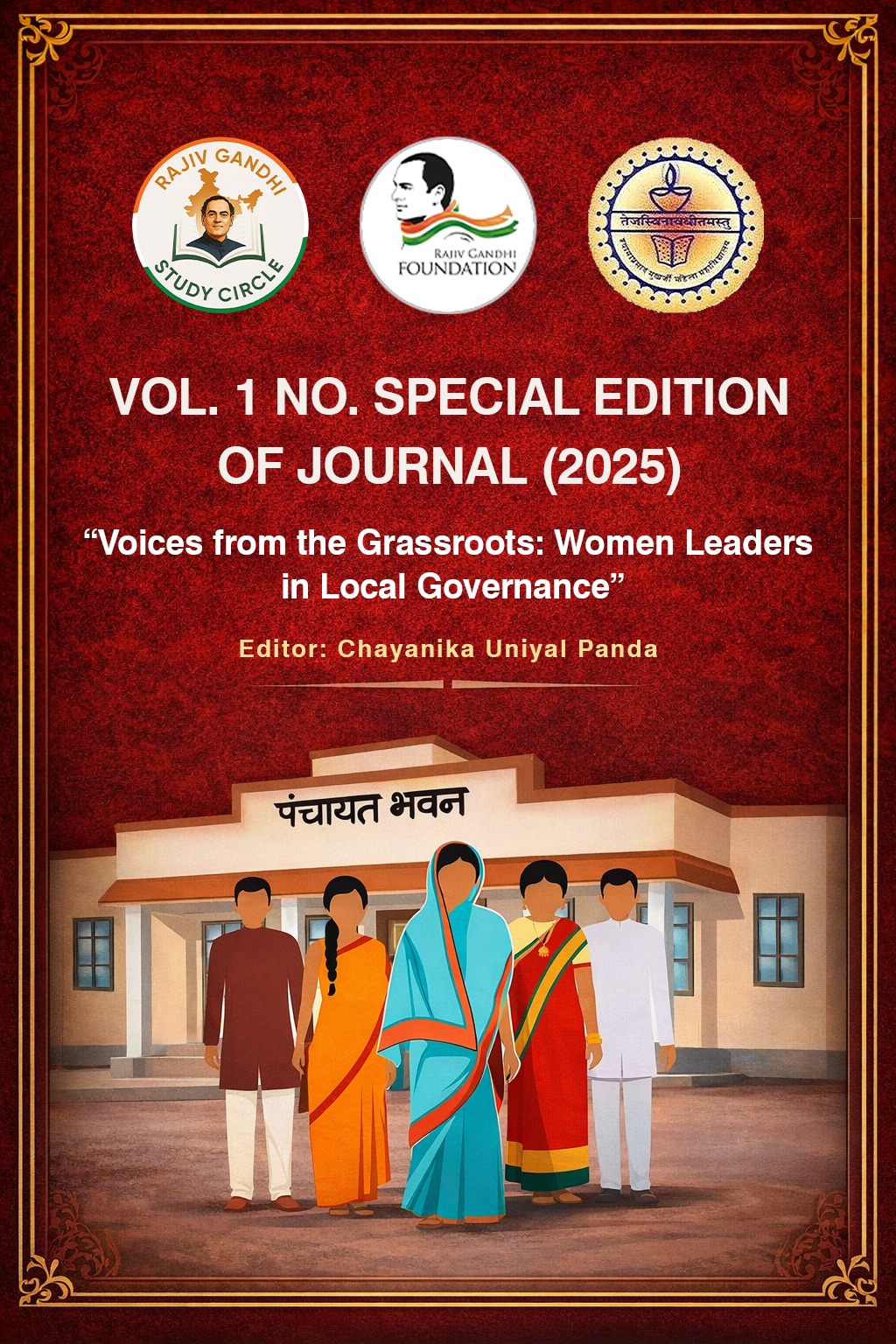
"Women’s Empowerment through Panchayati Raj Institutions: Evidence from Bihar"
Abstract
This paper examines the role of Panchayati Raj Institutions (PRIs) in empowering women in rural Bihar. Through the 73rd Constitutional Amendment, women were granted one-third reservation in local governance, later increased to 50% in several states including Bihar. The study explores how grassroots democracy has reshaped gender roles, provided leadership opportunities, and improved community participation among women. Using case study analysis, it highlights both progress and challenges in areas such as education, economic independence, and decision-making power. The findings reveal that women leaders in Panchayats are not only addressing local issues like sanitation, drinking water, and health but also reshaping socio-cultural perceptions about female leadership. However, barriers such as patriarchal norms, lack of training, and financial dependence continue to hinder their effectiveness. The paper concludes that capacity-building, awareness campaigns, and stronger institutional support are essential to ensure that women leaders can perform effectively and contribute to sustainable rural development.
Keywords: Women empowerment, Panchayati Raj Institutions, Bihar, grassroots democracy, gender equality
Downloads