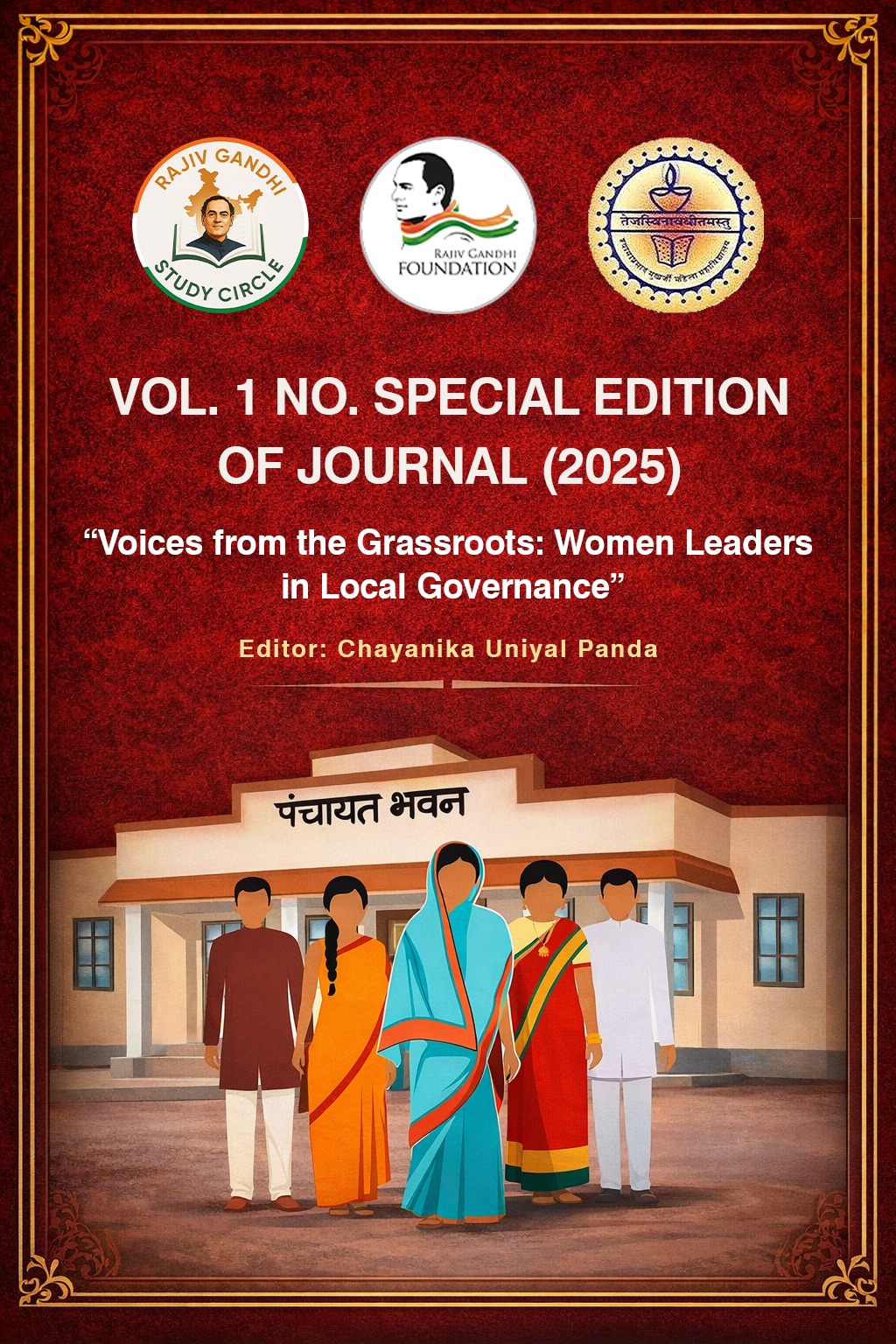
From Margins to Mainstream: Sarita Devi a Grassroot Trailblazer of Rajiv Gandhi's women empowerment vision
Abstract
This case study, “From Margins to Mainstream: Sarita Devi, a Grassroot Trailblazer of Rajiv Gandhi's Women Empowerment Vision,” examines the transformative impact of India’s 73rd Constitutional Amendment by chronicling the journey of Sarita Devi, the elected Mukhiya
(head) of Tirla Panchayat in Jharkhand. It positions her leadership as a direct realization of Rajiv Gandhi’s visionary policy to decentralize governance and empower women at the grassroots level.
Emerging from a background as an ASHA worker, Sarita Devi confronted deep-seated patriarchal norms and socio-economic disparities to drive inclusive development. Her governance, structured on women-centric development, pro-poor welfare, and crisisresponsive leadership, has yielded significant achievements. These include forming 50 SelfHelp Groups to foster economic independence, spearheading a successful campaign against alcoholism that reduced domestic violence, and implementing initiatives that slashed school dropout rates by 80%. Her efforts have ensured the effective delivery of pensions and ration cards to over a thousand vulnerable beneficiaries.
Honored at Vigyan Bhawan for her exemplary work, Sarita Devi’s journey exemplifies how mandated political reservation creates space for transformative feminist leadership. Her story demonstrates that when women lead, they champion inclusive decision-making and prioritize issues often overlooked in male-dominated spaces. This study concludes that Sarita Devi is not only an inspirational figure for rural women but also a living testament to the enduring power of Rajiv Gandhi’s vision for gender equity and grassroots democracy, proving that effective local governance is pivotal for sustainable and equitable national development.
Downloads